“That thing, that moment, when you kiss someone and everything around you becomes hazy and the only thing in focus is you and this person. And you realize that that person is the only person that you’re supposed to kiss for the rest of your life. And for one moment you get this amazing gift and you want to laugh and you want to cry, because you’re so happy you’ve found it, and so scared that it’ll go away all at the same time.”
-Josie Geller

Title: Never Been Kissed
Genre: Romance Comedy
Year: 1999
Rated: PG-13
Starring
Drew Barrymore as Josie Geller
Michael Vartan as Sam Coulson
David Arquette as Rob Geller
John C. Reilly as Gus
Plot: A nerdy, 25-year-old copy editor enrolls in a high school to write an expose on teenage life and ends up falling in love with her English teacher.
Tagline: The class geek just went chic.
First Viewing: 6th Grade (2000) at my best friend Ashley’s house.
Added to The List: Always been there.
Drew Barrymore as Josie Geller
Michael Vartan as Sam Coulson
David Arquette as Rob Geller
John C. Reilly as Gus
Plot: A nerdy, 25-year-old copy editor enrolls in a high school to write an expose on teenage life and ends up falling in love with her English teacher.
Tagline: The class geek just went chic.
First Viewing: 6th Grade (2000) at my best friend Ashley’s house.
Added to The List: Always been there.
Comments
I’ll never forget the first time I watched Never Been Kissed. I felt I related to the heroine on so many levels. After all, I had been stuck in Unrequited Loveville since first grade and I had yet to experience that joyous event that would allow me to cross the threshold into womanhood. It seemed like it would never come, and therefore, in Josie Geller, I found a friend with a shared experience. I was eleven.
 It’s rather ridiculous for me to look back on those days at this ripe old age of 20. At that time my greatest fear was never being kissed. But for me (and I know for others), this movie provided a buffer. 25 became the cutoff. If I hadn’t been kissed by then, well…I would officially become freakish. I imagine The 40-Year-Old Virgin does the same thing for the sexually inexperienced.
Never Been Kissed was my favorite romance comedy for years. And, no it didn’t get bumped off because I was finally kissed. It still manages to touch me today, even if that experience has passed me by. There are, amazingly enough, many facets to this film other then rounding first base. Identity. Disguise. Second chances. Social standing…ahhh, so much.
Unlike The 40-Year-Old Virgin, whose main conflict is getting Andy laid, this movie’s conflict involves Josie Geller’s undercover work at a high school. She is (apparently) the youngest looking person working at the Chicago Sun Times and is sent on the mission by the editor. Her boss, slutty best friend, and lazy brother all think it’s a terrible idea. But Josie is determined to be a reporter, even if it means going back to a time that was a living hell for her. Contrived? Certainly.
Josie tries to settle into her stereotypically suburban high school. Immediately, the popular kids reject her and torment her. However, just as easily as she was rebuffed by the in-crowd, the nerds happily adopt her into their group. Josie is back in high school in nearly every way, including being smitten with the big man on campus, Guy.
 However, Josie’s boss is not pleased with her story ideas, so he makes her wear a hidden camera so he can scan her tapes and find a suitable story. He also insists that she weasel her way into the popular crowd because that’s where the stories are. When that fails, Josie’s brother Rob, also enrolls at the high school, becomes popular in a day, spreads glowing rumors about Josie which immediately lifts her out of the nerds and into the popular group.
 All this while, Josie has been falling for her English teacher, Sam Coulson. And he, at times, seems to reciprocate. This brings up the most controversial part of this film. Many viewers find Josie and Sam’s relationship to be entirely inappropriate because he believes her to be 17 instead of 25 and he “abuses” his authority as her teacher/mentor.
 Personally, all this doesn’t bother me. Maybe it’s because I know she’s 25. Maybe it’s because I was underage at my first viewing and didn’t think it was such a travesty. Meh…still doesn’t bother me, but for those of you squeamish viewers out there, heads up.
Interspersed throughout the movie are Josie’s painfully embarrassing flashbacks to high school. Hygienically challenged and socially awkward, we first meet Josie while reading a poem to her not-so-secret object of affection, Billy Prince. Soon after, the impossible happens when Billy asks her to the prom. But as Josie is awaiting his arrival in her hideously metallic pink dress, Billy drives up in a limousine, with his stereotypically sexy date and throws an egg in her face.
 With Josie’s nerd friends giving her the cold shoulder, she becomes enveloped in the popular group. Even Guy starts to warm to her and asks her to prom. Josie’s popularity has grown so much, she is even crowned prom queen. While dancing with Sam, she is about to confess her love and true identity when she spots Guy playing a cruel trick on her best nerd friend. The truth comes out. Sam rejects her, believing that she meant to entrap him in some sort of sex scandal. Josie is left rejected and without a story.
 …or so it would seem.
Josie takes everything she has learned and presents it in a feature article. It explains her lack of romantic history and how she finally came to grips with her past and its repercussions. She admits to never being kissed and asks that certain person who was “hurt on her road to self discovery” to forgive her and kiss her on the pitcher’s mound at the baseball state championship, five minutes prior to the first pitch.
 The article is extremely popular and draws a huge crowd. Josie stands on the pitcher’s mound, patiently waiting for forgiveness. The five minutes pass and Josie accepts that Sam’s not coming. But, in true rom-com fashion, he shows up just in the nick of time, before all her hope is forever lost and gives her the perfect first kiss.
I’ll never forget the first time I watched Never Been Kissed. I felt I related to the heroine on so many levels. After all, I had been stuck in Unrequited Loveville since first grade and I had yet to experience that joyous event that would allow me to cross the threshold into womanhood. It seemed like it would never come, and therefore, in Josie Geller, I found a friend with a shared experience. I was eleven.
It’s rather ridiculous for me to look back on those days at this ripe old age of 20. At that time my greatest fear was never being kissed. But for me (and I know for others), this movie provided a buffer. 25 became the cutoff. If I hadn’t been kissed by then, well…I would officially become freakish. I imagine The 40-Year-Old Virgin does the same thing for the sexually inexperienced.Never Been Kissed was my favorite romance comedy for years. And, no it didn’t get bumped off because I was finally kissed. It still manages to touch me today, even if that experience has passed me by. There are, amazingly enough, many facets to this film other then rounding first base. Identity. Disguise. Second chances. Social standing…ahhh, so much.
Unlike The 40-Year-Old Virgin, whose main conflict is getting Andy laid, this movie’s conflict involves Josie Geller’s undercover work at a high school. She is (apparently) the youngest looking person working at the Chicago Sun Times and is sent on the mission by the editor. Her boss, slutty best friend, and lazy brother all think it’s a terrible idea. But Josie is determined to be a reporter, even if it means going back to a time that was a living hell for her. Contrived? Certainly.
Josie tries to settle into her stereotypically suburban high school. Immediately, the popular kids reject her and torment her. However, just as easily as she was rebuffed by the in-crowd, the nerds happily adopt her into their group. Josie is back in high school in nearly every way, including being smitten with the big man on campus, Guy.
However, Josie’s boss is not pleased with her story ideas, so he makes her wear a hidden camera so he can scan her tapes and find a suitable story. He also insists that she weasel her way into the popular crowd because that’s where the stories are. When that fails, Josie’s brother Rob, also enrolls at the high school, becomes popular in a day, spreads glowing rumors about Josie which immediately lifts her out of the nerds and into the popular group.All this while, Josie has been falling for her English teacher, Sam Coulson. And he, at times, seems to reciprocate. This brings up the most controversial part of this film. Many viewers find Josie and Sam’s relationship to be entirely inappropriate because he believes her to be 17 instead of 25 and he “abuses” his authority as her teacher/mentor.Personally, all this doesn’t bother me. Maybe it’s because I know she’s 25. Maybe it’s because I was underage at my first viewing and didn’t think it was such a travesty. Meh…still doesn’t bother me, but for those of you squeamish viewers out there, heads up.Interspersed throughout the movie are Josie’s painfully embarrassing flashbacks to high school. Hygienically challenged and socially awkward, we first meet Josie while reading a poem to her not-so-secret object of affection, Billy Prince. Soon after, the impossible happens when Billy asks her to the prom. But as Josie is awaiting his arrival in her hideously metallic pink dress, Billy drives up in a limousine, with his stereotypically sexy date and throws an egg in her face.
With Josie’s nerd friends giving her the cold shoulder, she becomes enveloped in the popular group. Even Guy starts to warm to her and asks her to prom. Josie’s popularity has grown so much, she is even crowned prom queen. While dancing with Sam, she is about to confess her love and true identity when she spots Guy playing a cruel trick on her best nerd friend. The truth comes out. Sam rejects her, believing that she meant to entrap him in some sort of sex scandal. Josie is left rejected and without a story. …or so it would seem.Josie takes everything she has learned and presents it in a feature article. It explains her lack of romantic history and how she finally came to grips with her past and its repercussions. She admits to never being kissed and asks that certain person who was “hurt on her road to self discovery” to forgive her and kiss her on the pitcher’s mound at the baseball state championship, five minutes prior to the first pitch.
The article is extremely popular and draws a huge crowd. Josie stands on the pitcher’s mound, patiently waiting for forgiveness. The five minutes pass and Josie accepts that Sam’s not coming. But, in true rom-com fashion, he shows up just in the nick of time, before all her hope is forever lost and gives her the perfect first kiss. I admire Josie for putting her ass on the line. In a way, she humiliated Sam by making him think he was a perv out to score some high school poon. By admitting her stunted sexual maturity, leaving her pride in his hands, and allowing gads of people to witness such a personal a private moment, I think she more than makes up for her deception.
I love Never Been Kissed because it shows that high school can still effect you after years have passed. Sure, most have forgotten and moved on. Many don’t remember certain conversations or events because they have been replaced with new ones. But some, like yours truly, remember everything and need some kind of closure or retribution.
It also addresses the importance of the first kiss to women. Certainly most women get their’s in their elementary/junior high years. But even if it’s on a pitcher’s mound, surrounded by hundreds of cheering supporters or in a smelly, janitor’s closet like…ahem…some people, it will never be forgotten.
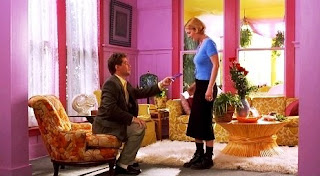
Favorite Screencap

Josie's devastation...and awesome shoes.
Next Film: Titanic




 Basically, Toaster’s trek consists of four sections. The first one, the longest and most boring, takes place in the woods while our faithful friends first start traveling to The City. On the way, they encounter a group of dancing frogs, who enjoy making faces in Toaster’s reflection. Blanky is captured by mice. The whole sequence goes on for too long. Even Toaster gets bored.
  Still, this sequence has one of the saddest, albeit unnecessary, moments in the history of animation. It’s even listed on Filmsite’s Greatest Tearjerker Films, Scenes, and Movie Moments of All-Time. Here’s the
  What’s the point of this scene? Countless times, I’ve seen this movie and still, I do not know. Is Thomas M. Disch saying something about technology’s relation to nature? Is this scene even in the book? Or did the animators think the story was lagging a little on the depressing storyline venue? As if being abandoned by the one person who loves them isn’t enough, now they have to break our hearts with this poor, wilting flower.
 And then this scary firefighter clown shows up.
  And then forks chase Toaster.
 And then he’s hanging helplessly above a bathtub full of water.
  Rest easy, my good readers, ‘tis only a dream. But still…what the fuck? How many kids started bawling after this sequence? How many turned off the VCR and never found out what happened to Toaster and his pals? And just what is the director trying to say here? Appliances have fears? And feelings? Pshaw! Nonsense!
 Many, to this day, consider this scene as some kind of rallying cry for homosexual appliances. With Toaster and Blanky both officially being male (a.k.a. being referred to as “he”), and supposing you had the mindset of a 5th grade boy, it could be taken this way. But I prefer to think Toaster and Blanky have more of a father/son relationship as opposed to a romantic one. (I mean, come on people, Blanky has got to be at least emotionally 6 years old!) It’s just another facet in this gem of a movie.
 Little does the group know as they make their way to The Master’s apartment, that he is recently graduated and towards college. And he needs a few cheap, old appliances. You know, the ones from the cottage. Oh, irony. If only they had waited a few more days, all this danger could easily be avoided. So The Master (now officially known as Rob) drives to the cottage and believes it’s been robbed.
 Irony strikes again when Rob decides he wants old stuff to take to the dorm. So he ends up going to Ernie’s Disposal (advertised as “Crazy Ernie’s Amazing Emporium of Total Bargain Madness, by Toaster’s old friend, the T.V.) to look for just that.
  While at “Crazy Ernie’s” our electrical friends accept their fate as scrap metal. Around them, old cars of all kinds sing their sob stories through the song “Worthless” as they are dropped on a conveyor belt and crushed into cubes. This is kind of like a precursor to Pixar’s Cars…but way more morbid.
  Anywho, the scary magnet who collects these cars seems to have it in for Toaster and his pals and relentlessly chases them around the junkyard. All seems lost, but hark! Thy Master comes along, recognizes his appliances from childhood and collects them. Mr. Evil Magnet doesn’t like this one bit and dumps the Master on the Conveyor Belt of Doom along with some other junk that traps him and destines him for Cubesville.
 Then the toaster, oh, that brave little toaster, selflessly throws himself into the gears of the cube maker, which saves his master’s life. And then somehow, Rob discovers what stopped the trash compactor. And that it was a toaster. And that it was his toaster from the cottage. Yeah…it’s all so realistic. But how else are we supposed to get to the happy ending?
 The Brave Little Toaster is, quite obviously, a prototype for Toy Story/Toy Story 2/Probably Toy Story 3, just by having inanimate objects come to life. As adults, it’s easy to look back fondly of playing with our toys. So, it’s just as easy to believe toys come to life in an animated feature, because they seemed so real back then. But how many of you played with your toaster? When was the last time you patted your desk lamp on the head? Or appreciated your vacuum? Creating sympathy for ordinary household objects is quite a feat, and this film manages to do it perfectly.
 I’ve done you a disservice by not talking about the other characters, so I’ll do it now, as this blog comes to a much needed end. The characters are truly what drives the film. Each of them is likable in their own way…even the annoying, babyish blanket. Lampy, with is naïve optimism, is my favorite. And unlike the title would have you believe, each of the characters acts bravely and sacrifices something to be reunited with their master.
 A shot of Toaster just before he sacrifices himself for The Master.